
What Is Gum Disease? Types, Stages & Effective Treatments
Tooth Care Dental Clinic in Nizampura, led by Dr. Nilam Dhameliya, offers comprehensive treatment for gum diseases. Gum disease, or periodontal disease, is a widespread oral health issue that affects the tissues surrounding and supporting the teeth. If untreated, it can lead to tooth loss, bone damage, and chronic infection. This blog will explain everything you need to know about gum disease, its types, stages, and the available treatments.
Gum disease, also known as periodontal disease, is treated by removing plaque and tartar buildup through professional cleaning, followed by scaling and root planing for deeper cleaning, and potentially antibiotic therapy or surgical interventions
What Is Periodontitis?
Periodontitis is a chronic inflammatory condition that affects the periodontium, which includes the gingiva (gums), periodontal ligaments, alveolar bone, and dental cementum. The term is derived from:
- Perio – around the tooth
- Dont – tooth
- Itis – inflammation
This condition typically begins with the buildup of plaque and tartar, leading to microbial biofilms and bacterial infection. According to the World Health Organization (WHO), periodontitis is one of the most common chronic diseases globally. Without proper dental hygiene and timely intervention, gingivitis can advance to irreversible periodontitis.
Causes of Periodontitis
Bacterial Origin
The primary cause of periodontitis is bacterial infection. The following pathogens are often responsible:
- Bacteroides gingivalis
- Bacteroides intermedius
- Actinobacillus actinomycetemcomitans
- Eikenella corrodens
- Spirochetes and various fusiform bacilli
These bacteria release harmful byproducts such as leucotoxins, collagenase, and enzymes that degrade gum tissue and bone.
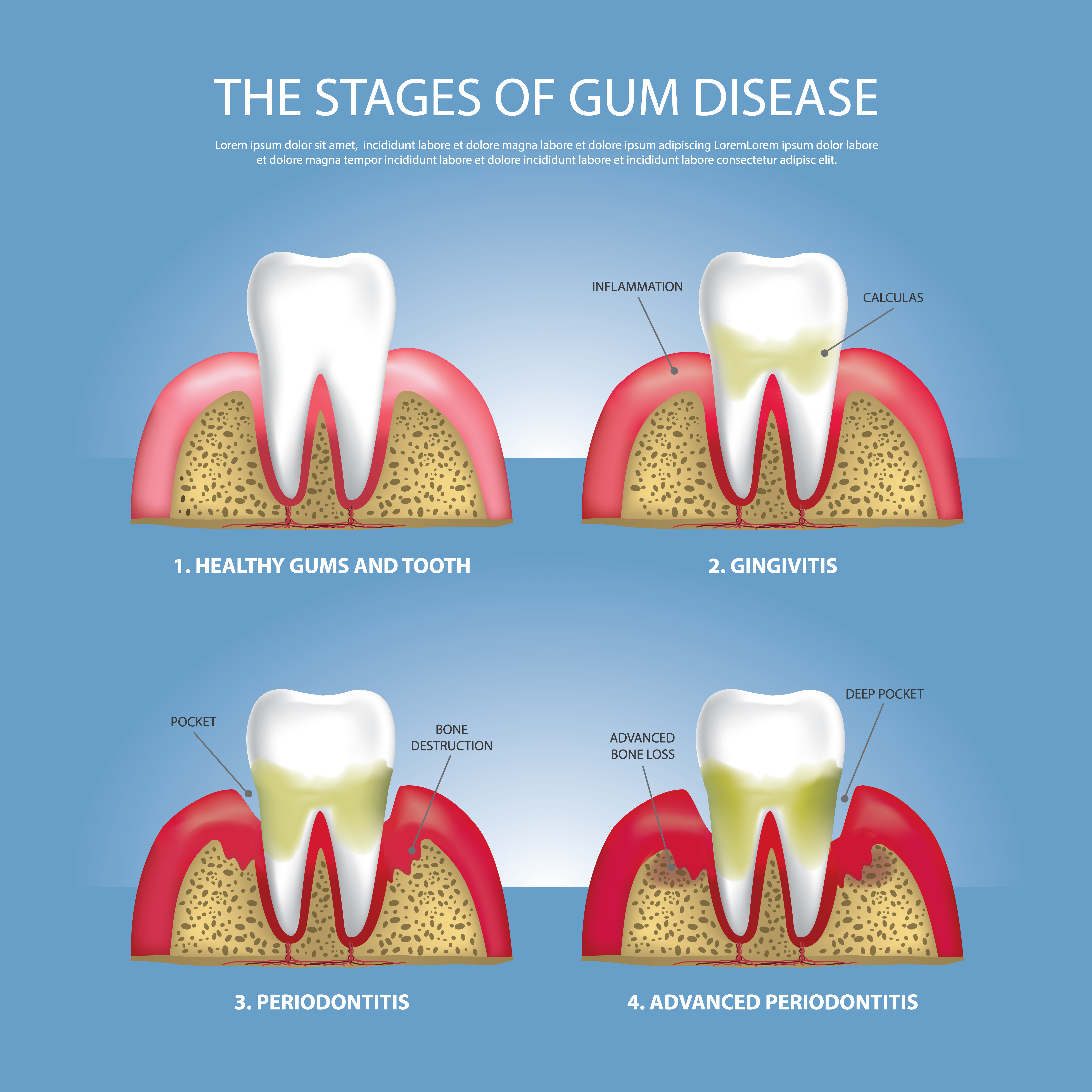
Stages of Gum Disease
Gum disease progresses through various stages, from mild inflammation to severe bone and tooth loss.
Stage 1 - Gingivitis
- Characterized by plaque buildup and mild gum inflammation
- Bleeding during brushing or probing
- Reversible with proper oral hygiene
- Probing depth: 2-3 mm
Stage 2 - Early Periodontitis
- Infection extends to supporting fibers
- 3-4 mm attachment loss
- 15–33% bone loss
- Probing depth: 5 mm or more
- Not reversible but manageable
Stage 3 - Moderate Periodontitis
- Characterized by plaque buildup and mild gum inflammation
- Bleeding during brushing or probing
- Reversible with proper oral hygiene
- Probing depth: 2-3 mm
Stage 4 - Advanced Periodontitis
- More than 50% bone loss
- Tooth mobility and furcation defects
- Severe gum recession and tooth loss
- Flap surgery, bone grafting, and guided tissue regeneration may be required
Types of Gum Disease
Gum disease is classified into multiple types based on progression and underlying conditions
Gingivitis
- Initial stage
- Reversible
- Common symptoms: bleeding gums, swelling, bad breath
Chronic Periodontitis
- Progressive bone and tissue loss
- Bleeding during brushing
- Deep pockets and mobility of teeth
Aggressive Periodontitis
- Rapid bone destruction
- Mostly affects molars and incisors
- Arc-shaped bone loss
- Generalized or localized
Necrotizing Ulcerative Periodontitis
- Seen in immunocompromised individuals (e.g., HIV patients)
- Tissue necrosis and ulcers
- Painful, foul-smelling lesions
Peri-Implantitis
- Inflammation around dental implants
- Swelling and tenderness of gums
- Bleeding without bone loss in early stages
Clinical Signs and Symptoms
- Red, swollen, or tender gums
- Bleeding while brushing or flossing
- Receding gum line
- Persistent bad breath
- Loose or shifting teeth
- Pus formation between teeth and gums
- Changes in bite pattern
Gum Disease Treatment Options
Non-Surgical Treatment
Scaling and Root Planing
- Removal of plaque and tartar from above and below the gum line
- Root surfaces are smoothed to prevent future bacterial colonization
- Usually the first step in managing mild to moderate periodontitis
Antimicrobial Therapy
- Chlorhexidine mouth rinses
- Antibiotic gels or fibers (e.g., tetracycline) placed in gum pockets
- Oral antibiotics in severe cases
Surgical Treatment
Flap Surgery (Pocket Reduction)
- Gingival tissue is lifted and tartar is removed
- Diseased tissue is excised
- Gums are repositioned and sutured for optimal healing
Bone Grafts
- Use of bone or synthetic materials to regenerate lost bone
- Often used with guided tissue regeneration membranes
Guided Tissue Regeneration (GTR)
- Placement of membranes that direct new bone and gum growth
- Encourages reattachment of gums to the teeth
Maintenance Phase
Follow-Up Visits
- Periodic professional cleaning
- Monitoring of gum pockets
- Oral hygiene education
Prevention Tips
- Brush twice daily with a soft-bristled toothbrush
- Floss at least once daily
- Use an antimicrobial mouthwash
- Regular dental checkups every six months
- Avoid smoking and sugary foods
Advanced Care at Tooth Care Dental Clinic
At Tooth Care Dental Clinic in Nizampura, Dr. Nilam Dhameliya provides expert care for all stages and types of gum diseases. The clinic is equipped with modern dental technology and ensures patient comfort throughout treatment.
Whether you’re facing early signs of gingivitis or advanced periodontitis, timely care from a skilled dentist near you is essential. The clinic follows evidence-based guidelines, focuses on infection control, and offers personalized solutions for lasting gum health.
Gum Disease FAQs
What are the first signs of gum disease?
The earliest signs of gum disease include red, swollen gums, bleeding while brushing or flossing, persistent bad breath, and mild gum tenderness. These symptoms are usually seen in gingivitis, the initial and reversible stage of gum disease.
Can gum disease be cured permanently?
Gingivitis can be reversed with proper oral hygiene and professional cleaning. However, advanced stages like periodontitis cannot be permanently cured but can be effectively managed through scaling, root planing, and surgical interventions.
How long does gum disease treatment take?
Treatment duration depends on the severity. Mild cases may improve in a few weeks with scaling and hygiene. Moderate to advanced periodontitis may require multiple sessions and follow-up visits over several months
What is the best treatment for periodontitis?
The best treatment often includes scaling and root planing, antimicrobial therapy, and in severe cases, flap surgery with bone grafting or guided tissue regeneration. Regular maintenance is crucial to prevent recurrence.
How can I prevent gum disease from returning?
Brush twice daily, floss regularly, avoid tobacco, maintain a balanced diet, and visit your dentist every 6 months for professional cleanings. Consistency in oral hygiene is the key to long-term prevention.
Visit Tooth Care Dental Clinic in Nizampura Today
Dr. Nilam providing expert gum disease care at Tooth Care Dental Clinic in Nizampura. Trusted dentist near me for advanced periodontal treatment and personalized oral health solutions.